
American Resonance
American Resonance
May 9, 2026
4:00 p.m.
Princeton University Chapel
American Resonance
May 9, 2026
4:00 p.m.
Princeton University Chapel
This winter and spring, Princeton Pro Musica celebrates the United States’ 250th anniversary in its concerts. In March, we presented Freedom Writers—works setting seminal American texts. Today, we’re performing American Resonance—a program featuring music by American composers. The program centers on two larger works: Frank Lewin’s Mass for the Dead and Leonard Bernstein’s Chichester Psalms. Both were written during a particular moment in American history: the second half of the 1960s.
As decades in American history go, the 1960s managed to be among the most exhilarating and the most heartbreaking. Those scant few years saw the landing of men on the moon, and the murder of dynamic leaders in broad daylight. The arc of that decade traces a tragic trajectory: the soaring promise of a young president's inauguration, the shock of Dallas, the kindling of the slow-burning conflict in Vietnam, rioting cities in flames, and then, in the spring of 1968 alone, the murder of Martin Luther King Jr. and Robert F. Kennedy. The two losses were so close together that the nation barely had time to process the first before the next was upon them. It was a decade that believed, perhaps more fervently than any before it, in the power of a single visionary voice to move the world; and it was a decade that proved, again and again, how fragile such a voice could be.
Both of the major works on this concert were born in this crucible and are, in a way, related. Leonard Bernstein had a close relationship with the Kennedy family. He conducted at JFK’s memorial. Then just five tragic years later, on June 5, 1968, JFK’s brother Robert F. Kennedy was shot. Twenty-five hours later, he died at only 42 years old. There, again, was Bernstein, conducting, at RFK’s service at St. Patrick’s Cathedral. The family decided to follow Robert’s funeral in New York by burial at Arlington National Cemetery the same day. On June 8, 1968, three days after the shooting, Kennedy’s body was transported by a private funeral train from New York City to Washington, D.C. An estimated 2 million ordinary Americans gathered beside the railroad tracks along the route to honor him as the train passed by. Part way through the 225-mile, eight-hour journey, the composer Frank Lewin and his daughters stood on the platform at Princeton Junction to pay their respects as the train passed slowly by.
Frank Lewin worked across a remarkably wide range of genres—theater, opera, songs, orchestral works, and film—composing dozens of original scores for acclaimed CBS television dramas such as The Defenders and The Nurses, and writing incidental music for plays by playwrights ranging from Shakespeare to Tennessee Williams. Among his notable concert works are the cantata Music for the White House, performed at a 1965 state dinner hosted by President Lyndon B. Johnson. Following the experience of seeing so many gathered for RFK’s funeral train, Lewin decided to compose a Requiem for Robert F. Kennedy, one of the very first settings in the English vernacular: Mass for the Dead. It premiered, in the Princeton University Chapel, in 1969.
Lewin’s daughter Naomi notes:
Frank Lewin and Robert Kennedy were both born in 1925, under very different circumstances. Kennedy, of course, was a member of a well-connected American Political dynasty; after attending Harvard University and the University of Virginia Law School, he dedicated his life to public service. My father, Frank Lewin, born in Brelsau, Germany (now part of Poland) was the son of Jewish merchants. The family was forced to flee Nazi Germany—first to Cuba, and then to the United States. Once they arrived in New York, my father was sent to vocational school to learn the printing trade so he could help support the family. But from a young age, he had wanted to be a composer. He continued to study music, and eventually won a scholarship to the Yale School of Music, after which he pursued his passion.
Lewin’s daughter admits: “I never thought to ask him, but I can imagine that the fact that he and Kennedy were the same age, and shared similar hopes for the country, played a role in his motivation."
Lewin immersed himself deeply in the traditions of the Catholic Mass before composing. As the Second Vatican Council had just changed the practice in worship from Latin to the vernacular, he wrote the work with the English text from the Mass for the Dead and the burial service. Just a few years ago, Princeton Pro Musica offered the Requiem of Maurice Duruflé, which bases its musical materials on Gregorian chant melodies. Lewin does, too, to great effect. And, as Duruflé does, Lewin makes great use of the vast capabilities of the organ. The Princeton Chapel’s mighty Mander organ was played at the premiere by Nancianne Parella, a famed collaborative pianist and organist who worked for years with William Trego and the Princeton High School Choir and Joseph Flummerfelt and Westminster Choir College.
Lewin’s setting is colorful and evocative. He keys in to the sharp contrasts animating the Requiem texts, notably the serenity of eternal rest versus the ominous hellfire of damnation. Lewin’s harmonic language remains tightly attuned to the demands of the text. “Eternal rest,” the image that opens and closes the work, and makes appearances throughout, is sung to pristine open intervals. When the text bids that the faithful departed pass from death to life, Lewin leads the tenor solo, sopranos, and altos up, and up, until they alight on a radiant C major chord on “life.” The Offertory and Libera Me are animated by the Requiem text’s scarier images, and Lewin’s music is fittingly fearsome. “The pains of hell and the deep pit” evoke biting dissonances. “When the heavens and the earth shall be shaken,” the tenors and basses careen through a jagged melody, roughed up by sharp-elbowed accents. The raging hellfire of judgement day unleashes the full force of the ensemble, with towering, pungently dissonant chords stacked from the lowest notes of the organ to the highest notes of the sopranos, and summons splashy outpourings from the organ. Lurking below calls for deliverance in both movements is the ominous, serpentine melody of the Gregorian “dies irae” chant, rumbling in the lowest tones of the organ’s pedals.
Lewin balances the terror of those passages with gentler music in the middle of the work. Of particular note is Lewin’s decision to include a setting of the Lord’s Prayer. Here he sets aside bold gestures for lovely, chordal, fluid writing. The Sanctus and Agnus Dei hew closely to pre-Vatican II origins, with melodic echoes of plainchant by turns grand and sumptuous and simple. The end of the burial service is the In Paradisum. Here Lewin fashions an entirely new atmosphere, radiant and ethereal. As Duruflé did, Lewin highlights the in paradisum Gregorian chant melody by setting it atop and apart from the ensemble as a flute solo. The serenity of eternal rest, recurring here and there throughout the Requiem as an open fifth, E-B, finally settles in, the glimmering brightness of E major, now complete, with G-sharps in the organ, the violence that took the life of Robert F. Kennedy silenced by the peacefulness he strove for in his lifetime and found, one hopes, after.
I’m delighted to feature Princeton University Organist, and Princeton Pro Musica’s collaborative keyboardist, Eric Plutz, on James Lee III’s Ascend the Mountain. The night before Martin Luther King was killed, he stood before a crowd in Memphis and told them he had been to the mountaintop. He had looked over. He might not get there with them, but they would. It was the kind of speech that, once heard, becomes almost impossible to separate from what came next: the single shot, the balcony, the city that erupted, and then the country. James Lee III was born in 1975, seven years after that April evening, but seemingly King's words lodged themselves somewhere deep in his imagination. Lee composed Ascend the Mountain: A Walk with Dr. King in 2000 for a Black History Month celebration at Andrews University. It’s neither lament nor laud, but rather something like a meditation on what it means to inherit and be inspired by a vision that someone else was not permitted to complete. The organ is an apt instrument for such a meditation: its capacity for both quiet inwardness and thunderous proclamation mirror the double-edged tactics and realities of the Civil Rights movement in those times: the stoic sit-in, the barbaric firehoses; the prayer meeting, the march; the soulful spirituals and the impassioned speeches. On a program of music from the 1960s, Lee’s Ascend the Mountain behaves almost as a kind of coda from the future that reminds us of the ongoing nature of these endeavors, of the painstakingly gradual, taut bend of King’s “arc of history” towards hoped-for justice.
Margaret Bonds finished her setting of the Prayer of St. Francis in January 1968, months before King and Kennedy would be killed and Lewin would begin his Mass. What strikes you, holding that date in mind, is the sheer audacity of the text she sets, and its echoes of King’s nonviolence: Lord, make me an instrument of thy peace; where there is hatred, let me sow love. The death of King deeply affected Bonds, whose music throughout the 1960s was inseparable from the civil rights struggle. Her Montgomery Variations of 1964, inspired by a 1963 visit to Montgomery, Alabama and dedicated to King, depict the bus boycotts and the Birmingham church bombing in music of considerable fire. But the Prayer of St. Francis goes the other direction entirely, facing the struggles of the 60s and offering, gorgeously, almost rhapsodically, the most radical answer to violence: that it might be met with love, injury with pardon, despair with hope.
The text of It Is Well with My Soul was written in 1873 by Horatio Spafford while crossing the Atlantic, passing over the very spot where, days earlier, all four of his daughters had drowned when their ship went down—a provenance that makes the hymn's central declaration not a platitude but something closer to a dare, an act of will so staggering it borders on defiance. Stuart Forster's arrangement, written for SATB choir and organ and commissioned for the choirs of Christ Church in Cambridge, Massachusetts, beautifully and powerfully underscores that assurance, that we can carry on, in song, “whatever my lot.”
The origins of Bernstein’s Chichester Psalms have one foot in the church and another in the theater. Dr. Walter Hussey, Dean of Chichester Cathedral, commissioned Bernstein to write a work for the combined choruses of Winchester, Salisbury, and Chichester Cathedrals. Hussey wrote to Bernstein: “I hope you will feel quite free to write as you wish and will in no way feel inhibited by circumstances. I think many of us would be very delighted if there was a hint of ‘West Side Story’ about the music.” In the end, Chichester was, largely, based on music that started as something for musical theater. Much of the material came from the discarded musical The Skin of Our Teeth. The most intense part of the Psalms—the tenors’ and basses’ gruff outbursts in the second movement—actually began as a chorus cut from the “Prologue” to West Side Story. Sondheim’s words “Mix—make a mess of ‘em! Make the sons of bitches pay” became “Lamah rag;shu goyim Ul’umim yeh’gu rik?” (Why do the heathen so furiously rage together?)
The dramatically tinged provenance yielded a delightfully dynamic, catchy piece of music. I’ve long appreciated the way the Chichester Psalms, like its close cousin West Side Story, balances Bernstein’s palpable love of a good tune with his facility with infectious rhythm, and beautiful lyricism with punchier, edgier music. Bernstein said, of Chichester: “It is quite popular in feeling … and it has an old-fashioned sweetness along with its more violent moments.”
Bernstein, famously, was not just a composer but also a conductor, a television personality, and educator. He regretted not making more time for composition. Chichester Psalms appeared during a period between 1957 and 1971 during which he produced only Chichester Psalms and one other work, the Kaddish Symphony (No. 3), amounting to just an hour or so of music. (By contrast, the period between 1951 and 1957 saw the creation of three Broadway musicals, a one-act opera, a film score, and a violin concerto). Bernstein took a sabbatical year, 1964-1965, from his directorship of the New York Philharmonic in order to focus on composing. A planned musical based on Wilder’s The Skin of Our Teeth didn’t pan out. Attempts at composing classical music fell short, too.
There is some sense that part of the struggle with composing was determining which style, of the many distinctive classical musical styles of the 1950s and 1960s, was his true voice. The Kaddish Symphony had embraced dissonance and the twelve-tone technique. The Chichester Psalms, by contrast, are straightforwardly, almost politically tonal. Bernstein wrote a poem about the sabbatical year, which includes these lines on the composition of the Chichester Psalms:
For hours on end I brooded and mused
On materiae musicae, used and abused;
On aspects of unconventionality,
Over the death in our time of tonality,
Over the fads of Dada and Chance,
The serial strictures, the dearth of romance,
“Perspectives in Music,” the new terminology,
Physiomathematomusicology;
Pieces called “Cycles” and “Sines” and “Parameters”—
Titles too beat for these homely tetrameters;
Pieces for nattering, clucking sopranos
With squadrons of vibraphones, fleets of pianos
Played with the forearms, the fists and the palms
--And then I came up with the Chichester Psalms.
These psalms are a simple and modest affair,
Tonal and tuneful and somewhat square,
Certain to sicken a stout John Cager
With its tonics and triads in E-flat major.
But there it stands—the result of my pondering,
Two long months of avant-garde wandering—
My youngest child, old-fashioned and sweet.
And he stands on his own two tonal feet.
The first movement is, at its core, a reflection of the Psalmist’s “joyful noise.” It opens with a cymbal crash to reflect Psalm 108’s command: Awake, psaltery and harp! I will arouse the dawn! After a maestoso opening, the movement gets going, setting psalm 100 as an allegro molto. The hurried, uneven 7/4 meter in the first movement’s setting of a psalm about praise and joy, having shaved off a half a beat, feels like a toddler on a dance floor, so physically enthralled with his surroundings that his little stomping feet are too impatient to wait for the next downbeat. The score is peppered with quick dynamic transitions and punchy accents, cheeky and fun.
The second and third movements more acutely convey some of the turbulence of the mid-1960s. I’m sure a lot of us have seen Lenny’s call to arms made after learning of the death of JFK: “This will be our reply to violence: to make music more intensely, more devotedly, more beautifully than ever before.” Notably, for a memorial concert with the New York Philharmonic shortly thereafter, Bernstein eschewed the traditional Requiem for Mahler’s “Resurrection” symphony. Bernstein cited Mahler’s “visionary concept of hope” and summoned “strength to go on striving for those goals Kennedy cherished.” At 4 a.m. on the day after the funeral, Jacqueline Kennedy wrote Bernstein a seven-page, handwritten letter of gratitude, and Lady Bird Johnson described witnessing "an expression of the utmost passion, of torment" in Bernstein's rendering of the Mahler work. Five years later, he would conduct more Mahler (this time the “Adagietto” from the Fifth Symphony) at Robert Kennedy’s funeral at St. Patrick’s Cathedral. Bernstein said of Bobby Kennedy, "Of all the political men that I have ever met, [he] was certainly the most moving and compassionate and lovable.”
Bernstein was no stranger to the musical-political statement. As early as 1948, in the aftermath of World War II, he led seventeen Jewish survivors of the St. Ottilien internment camp in a program that included Gershwin’s Rhapsody in Blue. On the eve of the inauguration of Nixon’s second term, January 19, 1973, Bernstein led a “Concert for Peace” at the National Cathedral, in protest, performing Haydn’s Mass in a Time of War. And the list goes on. He performed at the Vatican for John Paul II in 1981. With James Levine in 1987, he conducted a benefit concert for AIDS research at Carnegie Hall. Just a year before his death, in 1989, Bernstein refused a National Medal of the Arts in protest of the revocation of an NEA grant for AIDS-related art.
In 1965, while in the middle of working on the Chichester Psalms, Bernstein flew to Alabama at the behest of Harry Belafonte to perform at the “Stars for Freedom Rally” alongside Pete Seeger, Joan Baez, Tony Bennett, and Mihalia Jackson. One has to imagine that intercultural conflict wasn’t far from his mind, be it the turf wars of the Jets and Sharks, or the fight for racial justice in Alabama and across the US.
In Chichester’s second movement, Bernstein juxtaposes the famous Psalm 23 (“The lord is my Shepherd” and Psalm 2 (“Why do the Nations so furious rage together?”) The Lord is my shepherd is given to a male soprano, with harp—innocence in sound, in Bernstein’s mind. The movement unfolds in sweet, gentle tranquility, the clamor of the first movement calmed. But just as the reverie takes hold, the tenors and basses barge in with Psalm 2 in quite the violent musical scrum, all slaps, outbursts, and snide whispers. The tranquility returns, but as the upper voices sustain their last note, a trumpet snarls out the tenor’s and bass’s rage motif, and the thing comes to a close with a drum beat.
It leaves us wondering: how are that innocence and rage reconciled? Can music be a part of the reconciliation? Bernstein’s biography would leave us thinking that he, at least, hoped so. In 1973, he would conduct the Chichester Psalms at a concert for the Pope, televised all over Europe. In September 1989, Bernstein conducted the work at a concert in Warsaw marking the fiftieth anniversary of the outbreak of World War II. The orchestra and choruses were Polish, the soloists Polish and American. The program included Schoenberg’s Survivor from Warsaw, narrated by the granddaughter of a holocaust victim, and Penderecki’s Polish Requiem. This was just a few months before he famously conducted Beethoven’s Ninth Symphony, with its Ode to Joy, at the Berlin Wall, substituting the titular “freude” (joy) with “freiheit” (freedom). Beethoven’s setting of Schiller’s Ode to Joy transforms it into a radical statement about brotherhood and togetherness. “Your magics join again what custom strictly divided.” The famous tune is the essence of simplicity. Everyone in this chapel could hum its stepwise simplicity in near-perfect unanimity. Beethoven dreamt of a joy so deep and universal that it could bring us all back together and fashioned it in idealistic music that he would never hear outside his mind. That Bernstein fervently believed in such an idea is evident not only in his politically motivated conducting exploits but in his own compositions. I can’t help but think of the optimism of the rising seventh in “there’s …. a …. place for us.”
A work appearing just a few years after Chichester seems to expand his sacred-secular project. When it came time to open the new Kennedy center in 1971, Jaqueline Kennedy turned to Bernstein to create something. He created his one of a kind Mass—a setting of the Catholic ordinary infused with the feeling of the popular music of that time. This musical offering, too, wasn’t without political intrigue. An FBI memo dated just three weeks before opening night was titled "Proposed Plans of Antiwar Elements to Embarrass the United States Government," and described a rumored plot by Bernstein to embarrass the President through an antiwar composition. The FBI noted that Bernstein had visited the antiwar Jesuit priest Daniel Berrigan in prison, and rumors circulated that Berrigan had contributed Latin text with an antiwar theme. Nixon's advisors ultimately talked him out of attending, warning him there was a "secret message" hidden in the Latin text deliberately designed to embarrass the President. The offending line turned out to be simply "dona nobis pacem” (“grant us peace,”) from the standard liturgy, said at every Mass, ever.
Despite the backstage drama, the public's reaction was rapturous. The first preview performance was attended by the general public, and they erupted into a twenty-minute ovation. Bernstein wept. Few, if any figures have done as much since to make the case that all kinds of music are, well, music—of value—and have brought pop and classical and jazz and funk all under one roof quite as convincingly. The critical reception was a different matter. Harold Schonberg's comments in the New York Times were dismissive: "It is a pseudo-serious effort at rethinking the Mass that basically is, I think, cheap and vulgar. It is a show-biz Mass, the work of a musician who desperately wants to be with it.” The Washington Post's Paul Hume took the opposite view, hailing the work as a "rich amalgamation of the theatrical arts" and "the greatest music Bernstein has ever written."
And so, what happens in the final section of Chichester Psalms, finished just a few years before? The third movement again combines various musical influences and styles and tries to reconcile them. Coming straight out of the second movement, it opens with a long introduction in the organ, anguished, redolent of Shostakovich’s 5th symphony and the more intense sections of the Mahler symphonies Bernstein adored. Eventually this yields, beautifully, into a lulling, beautiful melody in the tenors and basses for psalm 131 conveying a text about humility, finding innocent hope as a child would. Eventually the choir takes up Bernstein’s beautiful melody, in unison, on an “ah,” just vocalise—peace and human harmony in sound.
At the very end, Bernstein revives the chords that open the entire work to set the profound words (and something of a credo): “behold how good and how pleasant it is for people to dwell together in unity.” The accompaniment disappears, leaving just the choir, who are instructed to sing, as quietly and as slowly as possible, sustained chords charged by twinges of dissonance. When the chords resolve on the word “yachad,” the music reflects the origins of that lyric in the word “yachad,” which connotes oneness in unity. We’re left musing on the magic of pure unison—its clarity and beauty.
Why do the nations rage so furiously together? Can we find the oneness and unity the music performs for us? Such concerns are generating quite a bit of noise in our current chaotic moment. Thirty-six years after Bernstein’s death, even if some of the arguments have remained the same, the way we communicate around them has not. Much ink has been spilled about the (at best) futility and (at worst) corrosive impact of our yelling at each other anonymously, in the faux bravery of our online echo chambers. It can be very difficult to hear harmony amidst so much noise. One wonders what Bernstein, who wept openly at a 20-minute ovation, who hid dona nobis pacem in plain Latin sight, would make of the fact that the performing arts center he opened is now silent, shuttered not by protest but by renovation, a word that in this case feels closer to erasure. He was, of course, no stranger to the particular American talent for turning a cultural institution into a political football: he had lived through Tom Wolfe's skewering, J. Edgar Hoover's file cabinet, and Harold Schonberg's withering pen, and had wept through all of it anyway. Perhaps weeping and composing were, for him, two aspects of the same act. It is tempting to imagine him at the piano right now, working, as he always did, at the uncomfortable seam between faith and doubt, between the sacred and the street—and perhaps finding there something that insisted on being sung. What Bernstein understood, and what the empty hall on the Potomac can’t quite extinguish, is that music does not require a building's permission to mean something; it only requires that someone, somewhere, refuses to stop playing. Both Lewin’s offering for RFK, and Bernstein’s Chichester Psalms, speak to us decades later, from that turbulent time, and remind us what music can do: not resolve the contradictions of a broken world, but give us a space to hold them, together, in sound.
© 2026, Ryan J. Brandau
Mass for the Dead (Requiem for Robert F. Kennedy), Frank Lewin (1925-2008)
1. Introit and Kyrie (Chorus, Bass solo, Organ)
3. Offertory Antiphon (Chorus, Tenor solo, Organ)
4. Sanctus (Chorus, Organ)
5. Lord's Prayer (Chorus, Organ)
6. Agnus Dei (Chorus, Organ)
8. Libera Me (Chorus, Soprano and Bass solos, Organ)
9. Lord's Prayer (Organ solo)
10. In Paradisum (Chorus, Organ)
Jody Velloso, soprano | Jonathan Hartwell, tenor | Max Brey, baritone
Ascend the Mountain (A Walk with Dr. King), James Lee III (b. 1975)
Eric Plutz, organ
St. Francis' Prayer, Margaret Bonds (1913-1972)
It is Well with My Soul, Philip P. Bliss (1838-1876), arr. Stuart Forster (b. 1971)
Chichester Psalms, Leonard Bernstein (1918-1990)
- Psalm 108, v. 2; Psalm 100
Jody Velloso, soprano; Janet Breslin, alto; Jonathan Hartwell, tenor; Kyle St. Saveur, baritone - Psalm 23; Psalm 2, vs. 1-4
Eric S. Brenner, countertenor - Psalm 131; Psalm 133, v. 1
Jody Velloso, soprano; Janet Breslin, alto; Jonathan Hartwell, tenor; Kyle St. Saveur, baritone
Elaine Christy, harp
John Ferrari, percussion
Eric Plutz, organ
I'll Be On My Way, Shawn Kirchner (b. 1970)
Kenny Litvack, baritone
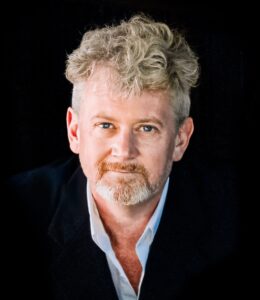 Eric S. Brenner, countertenor, has been hailed for his "penetrating eloquence," "astonishing solo singing" (NY Times), & "auto-tuned Mr. Roboto majesty" (Stage Mage). Some highlights include Arvo Pärt’s Pater Unser at the Metropolitan Museum of Art, Bach cantatas in Eynsham, UK, music of New Spain with Folger Consort in Washington, DC, & a recital of works by 17th century Italian composer/castrato Marc’Antonio Pasqualini. Since 2019, Eric has proudly served as countertenor and managing director of Western Wind. In these roles, Eric gets to indulge in many of his favorite things including consort work, very old music, very new music, teaching, producing, arranging, ice cream, and so much more! Other engagements include: alto soloist in Vivaldi’s Introduction and Gloria at St. Thomas Church Fifth Avenue; soprano & alto soloist in Handel’s Messiah at Avery Fisher (Geffen) and Alice Tully Hall; Bernstein’s Chichester Psalms at Carnegie Hall, Geffen Hall, St. Thomas Church, St. John the Divine, and St. Ignatius Loyola; frequent performances with American Opera Projects, Artek, and Les Canards Chantants. Eric premiered the roles of Doodle in Stefan Weisman’s and David Cote’s Scarlet Ibis; Beast in Han Lash’s Blood Rose; and Poet in Virko Baley’s Holodomor in Ukraine. Eric has also premiered works by Jessica Meyer, Doug Balliet, Kamala Sankaram, and Toby Twining. When he's not singing, Eric writes fiction, is co-composer of music with Matt Shloss for Rob Reese's Yahweh's Follies, persists in being an incorrigible Mets fan, and really seriously enjoys long walks on the beach without any irony at all. Find out more at www.ericsbrenner.com
(To optimize view, rotate mobile devices to landscape orientation)
Mass for the Dead (Requiem for Robert F. Kennedy)
Introit and Kyrie
Eternal rest grant unto them, O Lord,
And let perpetual light shine upon them.
To you we owe our hymn of praise, O Lord In Sion,
To you must vows be fulfilled in Jerusalem.
Hear my prayer: to you all flesh must come.
Eternal rest.
Lord: and let perpetual light shine upon them.
Lord have mercy. Christ have mercy. Lord have mercy.
Gradual and Tract
Eternal rest grant unto them, O Lord,
And let perpetual light shine upon them.
The just man shall be in everlasting remembrance;
An evil report he shall not fear.
Absolve, O Lord, the souls of all the faithful departed from every bond of sin.
And by the help of Your grace may they deserve to escape the judgement of vengeance,
And to enjoy the blessedness of light eternal.
Offertory Antiphon
Lord Jesus Christ, King of Glory,
Deliver the souls of the faithful departed from the pains of hell and the deep pit;
Deliver them from the lion’s mouth;
May hell swallow them not up,
Nor may they fall into darkness,
But may Michael, the holy standard bearer,
Bring them into the holy light;
Which you once promised to Abraham and his seed.
We offer you, O Lord, sacrifices and prayers of praise;
Receive them for the souls whom we remember this day .
Grant, O Lord, that they shall pass from death to life,
O Lord, grant them life which you once promised to Abraham and his seed.
Sanctus
Holy, holy, holy, Lord God of Hosts
Heaven and earth are filled with your glory.
Hosanna in the highest.
Blessed is he who comes in the name of the Lord.
Hosanna in the Highest.
Lord’s Prayer
Our Father who art in heaven,
Hallowed be thy name;
Thy Kingdom come,
They will be done on earth as it is in heaven.
Give us this day our daily bread;
And forgive us our trespasses
As we forgive those who trespass against us;
And lead us not into temptation,
But deliver us from evil.
Agnus Dei
Agnus Dei qui tollis peccata mundi, dona eis requiem.
Lamb of God who takes away the sins of the world,
Grant them rest.
Agnus Dei qui tollis peccata mundi, dona eis requiem sempiternam.
Communion Antiphon
May eternal light shine upon them, O Lord:
With Your saints forever,
For You are merciful.
Eternal rest unto them, O Lord;
And let perpetual light shine upon them,
With Your saints forever,
For You are merciful.
Libera Me
Deliver me, O Lord, from everlasting death on that day of terror:
When the heavens and earth will be shaken.
As you come to judge the world by fire.
I am in fear and trembling at the judgement and the wrath that is to come:
When the heavens and earth will be shaken.
That day will be a day of wrath, of misery, and of ruin:
A day of grandeur and great horror.
As You come to judge the world by fire.
Eternal rest, Lord,
And let perpetual light shine upon them,
Deliver me, O Lord, from everlasting death on that day of terror:
When the heavens and earth will be shaken.
As You come to judge the world by fire.
Lord have mercy, Christ have mercy, Lord have mercy.
In Paradisum
May the angels take you into paradise.
May the martyrs come to welcome you on your way.
And lead you into the holy city, Jerusalem.
May the choir of angels welcome you,
And with Lazarus who once was poor may you have eternal rest.
Conclusion
Eternal rest, grant unto them, O Lord,
And let perpetual light shine upon them.
St. Francis’ Prayer
Text by St. Francis of Assisi
Music by Margaret Bonds
Lord, make me an instrument of your peace:
where there is hatred, let me sow love;
where there is injury, pardon;
where there is doubt, faith;
where there is despair, hope;
where there is darkness, light;
and where there is sadness, joy.
O divine Master, grant that I may not so much seek
to be consoled as to console,
to be understood as to understand,
to be loved as to love.
For it is in giving that we receive,
it is in pardoning that we are pardoned,
and it is in dying that we gain eternal life.
It Is Well With My Soul
Text by Horatio Spafford
Music by Philip P. Bliss
Arranged by Paul Forster
When peace like a river, attendeth my way,
When sorrows like sea billows roll,
Whatever my lot, thou hast taught me to say
It is well, it is well with my soul.
It is well with my soul
It is well, it is well with my soul.
Though Satan should buffet, though trials should come
Let this blest assurance control,
That Christ has regarded my helpless estate,
And hath shed His own blood for my soul.
It is well with my soul
It is well, it is well with my soul.
My sin, oh, the bliss of this glorious thought!
My sin, not in part but the whole,
Is nailed to the cross, and I bear it no more,
Praise the Lord, praise the Lord, o my soul!
It is well with my soul
It is well, it is well with my soul.
For me, be it Christ, be it Christ hence to live,
If Jordan above me shall roll,
No pang shall be mine, for in death as in life,
Thou wilt whisper Thy peace to my soul.
It is well with my soul
It is well, it is well with my soul.
But the Lord, ‘tis for Thee, for Thy coming we wait,
The sky, not the grave, is our goal.
Oh trumpet of angels! Oh voice of the Lord!
Blessed hope, blessed rest of my soul.
And Lord, haste the day
When the faith shall be sight,
The clouds be rolled back as a scroll;
The trumpet shall sound,
And the Lord shall descend,
Even so, it is well with my soul.
It is well with my soul
It is well, it is well with my soul.
Chichester Psalms
Text from the book of Psalms
Music by Leonard Bernstein
Movement I
Psalm 108, v. 2
| Urah, hanevel, v'chinor! A-irah shachar! |
Awake, psaltery and harp: I will rouse the dawn! |
Psalm 100
| Hari'u l'Adonai kol ha'arets. Iv'du et Adonai b'simcha Bo'u l'fanav bir'nanah. D'u ki Adonai Hu Elohim. Hu asanu v'lo anachnu. Amo v'tson mar'ito. Bo'u sh'arav b'todah, chatseirotav bit'hilah, Hodu lo, bar'chu sh'mo. Ki tov Adonai, l'olam chas'do, V'ad dor vador emunato. |
Make a joyful noise unto the Lord all ye lands. Serve the Lord with gladness. Come before His presence with singing. Know that the Lord, He is God. He made us, and we are his. We are His people and the sheep of His pasture. Come unto His gates with thanksgiving, And into His court with praise. Be thankful unto Him and bless His name. the Lord is good, His mercy everlasting And His truth endureth to all generations. |
Movement II
Psalm 23
| Adonai ro-i, lo echsar. Bin'ot deshe yarbitseini, Al mei m'nuchot y'nachaleini, Naf'shi y'shovev, Yan'cheini b'ma'aglei tsedek, L'ma'an sh'mo. Gam ki eilech B'gei tsalmavet, Lo ira ra, Ki Atah imadi. Shiv't'cha umishan'techa Hemah y'nachamuni. Ta'aroch l'fanai shulchan, Neged tsor'rai Dishanta vashemen roshi Cosi r'vayah. Ach tov vachesed Yird'funi kol y'mei chayai, V'shav'ti b'veit Adonai L'orech yamim. |
The Lord is my shepherd, I shall not want. He maketh me to lie down in green pastures, He leadeth me beside the still waters, He restoreth my soul, He leadeth me in the paths of righteousness, For His name's sake. Yea, though I walk Through the valley of the shadow of death, I will fear no evil, For Thou art with me. Thy rod and Thy staff They comfort me. Thou preparest a table before me In the presence of my enemies, Thou anointest my head with oil, My cup runneth over. Surely goodness and mercy Shall follow me all the days of my life, And I will dwell in the house of the Lord Forever. |
Psalm 2, vs. 1-4
| Lamah rag'shu goyim Ul'umim yeh'gu rik? Yit'yats'vu malchei erets, V'roznim nos'du yachad Al Adonai v'al m'shicho. N'natkah et mos'roteimo, V'nashlichah mimenu avoteimo. Yoshev bashamayim Yis'chak, Adonai Yil'ag lamo! |
Why do the nations rage, And the people imagine a vain thing? The kings of the earth set themselves, And the rulers take counsel together Against the Lord and against His anointed. Saying, let us break their bonds asunder, And cast away their cords from us. He that sitteth in the heavens Shall laugh, and the Lord Shall have them in derision! |
Movement III
Psalm 131
| Adonai, Adonai, Lo gavah libi, V'lo ramu einai, V'lo hilachti Big'dolot uv'niflaot Mimeni. Im lo shiviti V'domam'ti, Naf'shi k'gamul alei imo, Kagamul alai naf'shi. Yachel Yis'rael el Adonai Me'atah v'ad olam. |
Lord, Lord, My heart is not haughty, Nor mine eyes lofty, Neither do I exercise myself In great matters or in things Too wonderful for me to understand. Surely I have calmed And quieted myself, As a child that is weaned of his mother, My soul is even as a weaned child. Let Israel hope in the Lord From henceforth and forever. |
Psalm 133, v. 1
| Hineh mah tov, Umah nayim, Shevet achim Gam yachad. |
Behold how good, And how pleasant it is, For brethren to dwell Together in unity. |
I’ll Be On My Way
Text and Music by Shawn Kirchner
When I am gone don't you cry for me,
Don't you pity my sorry soul.
What pain there might have been will now be passed
And my spirit will be whole.
I'll be on my way, I'll be on my way,
I'll have left my feet of clay upon the ground
I will be glory bound; I'll be on my way.
When I am gone please forgive the wrongs
that I might have done to you.
There'll be no room for regrets up there high above
Way beyond the blue.
I'll be on my way, I'll be on way,
I'll have laid my frown and all my burdens down
I'll be putting on my crown; I'll be in my way.
When I am gone don't you look for me
In the places I have been.
I'll be alive but somewhere else,
I'll be on my way again.
I'll be on my way, I'll be on my way,
I will lift my wings and soar into the air,
There'll be glory everywhere; I'll be on my way.
I'll have laid my frown and all my burdens down,
I'll be putting on my crown; I'll be on my way.
I'll have left my feet of clay upon the ground,
I will be glory bound, I'll be on my way.
| Soprano
Gail Balog |
Alto
LaVerna Albury |
| Tenor
Morris Cohen |
Bass
Charles Appel |
Harp
Elaine Christy
Percussion
John Ferrari
Organ
Eric Plutz
A very special thank you to the staff and crew of the Princeton University Chapel for all your help.
Princeton Pro Musica wishes to thank the following individuals and organizations for providing their assistance and support:
Discover Jersey Arts
Innvoke Print and Marketing Solutions
Princeton Area Community Foundation
Princeton Mercer Chamber of Commerce
Regina Opera Company for their Supertitles template
VOLUNTEER COORDINATOR
Janet Breslin
AUDITIONS COORDINATOR
Janet Perkins
BOOKKEEPER
Maureen Kyle
CHAMBER CHORUS COORDINATORS
Susan Bindig
Carolyn Landis
CONCERT HOUSE STAFF
Kitanya Khateri
Kevin Dziuba
CONCERT MANAGER
Dianne D. Miles
DIGITAL PROGRAM
Dianne D. Miles
MUSIC COORDINATION
Sara Maldonado
OFFICE ASSISTANT
Janet Perkins
SOCIAL MEDIA ASSISTANT
Hazel Eaton
OUTREACH COORDINATOR
Nina Lucas
REHEARSAL COORDINATOR
Janet Breslin
SECTION LEADERS
Candus Hedberg, soprano
Kim Neighbor, alto
Gary Gregg, tenor
Chuck Appel, bass
WEBMASTER
Kenny Litvack
Related Events
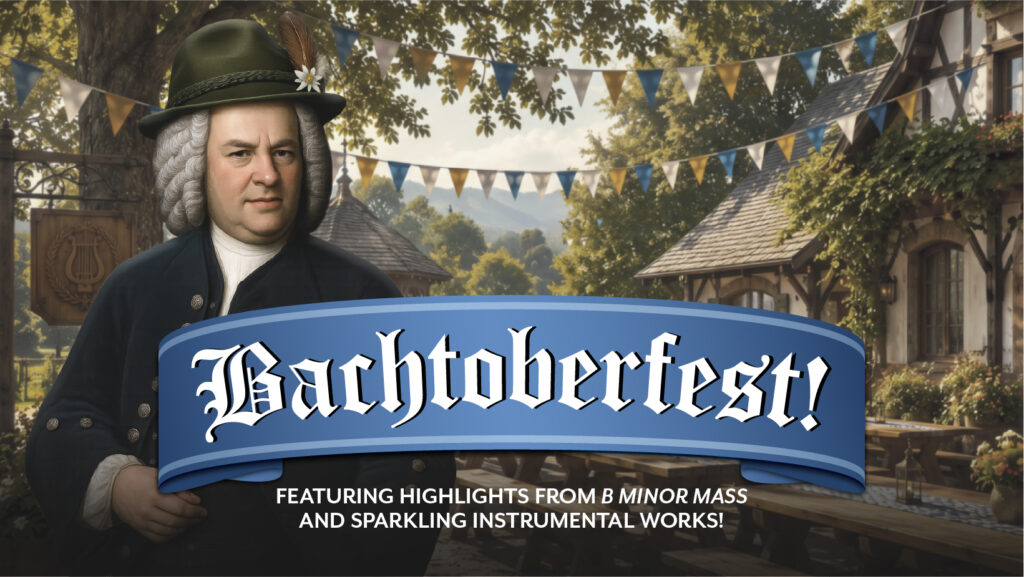
Bachtoberfest!
Sunday, October 25, 2026, 4 p.m. | Pre-concert talk, 3 p.m.

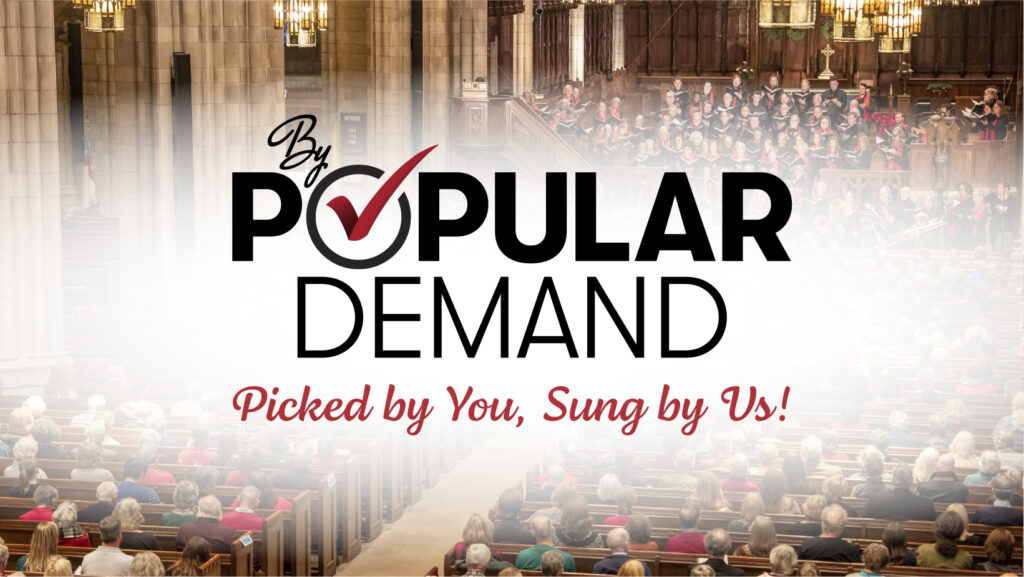
BY POPULAR DEMAND: Picked by You, Sung by Us!
Saturday, March 13, 2027, 4 p.m.