
Bachtoberfest!
Bachtoberfest!
Marisa Curcio, soprano
Kate Maroney, mezzo-soprano
Sam Denler, tenor
Sunday, October 25, 2006, 4:00 p.m.
Pre-concert talk, 3 p.m.
Richardson Auditorium
Princeton University
Bachtoberfest!
Marisa Curcio, soprano
Kate Maroney, mezzo-soprano
Sam Denler, tenor
Sunday, October 25, 2006, 4:00 p.m.
Pre-concert talk, 3 p.m.
Richardson Auditorium
Princeton University
Welcome to the 2026-2027 season of Princeton Pro Musica!
Over our fifteen seasons together, we’ve often returned to the music of J.S. Bach. Like many music-lovers and musicians, I’ve always held a special place in my heart for his music. This afternoon, we’re celebrating Bachtoberfest, so I turned to some of his most festive, exuberant music.
I can’t pinpoint exactly why I find myself returning again and again to Bach, but I suspect it has something to do with how engaging the music is—bodily, mentally, spiritually. My earliest entanglements with Bach’s music left me painfully aware of the gulf between its technical sophistication and my technical ineptitude, as my fingers fumbled across my piano keyboard and cello fingerboard. But even then, the reward outweighed the effort. The complexity of Bach’s music can frustrate, but it does not alienate. We naturally revel in the heightened sense of execution the music demands, whether we’re performing it or listening to it. In this way, the challenging nature of the music is the aesthetic experience. To see a Bach score on paper is to be overwhelmed by black ink; to hear a Bach score in the hands of experts is to stand in awe of the capabilities of the human mind and body.
Heard in this way, as sheer sound, Bach’s music is deeply satisfying. But it’s not just technical tour de force. Beneath the ink-speckled surfaces exists a body of work with a fascinating ability to transmit and grapple with multiple meanings. Even in his purely instrumental music, Bach’s natural feel for musical rhetoric yields clear musical sentences and paragraphs worthy of the greatest orators. Bach’s music reconciles seemingly opposite qualities in paradoxical combinations: daunting complexity and powerful directness; abstract contrapuntal meticulousness and ornate, improvisatory spontaneity; divine grandeur and worldly struggle. Bach was routinely drawn to theological concepts that reconcile seemingly opposite qualities in paradoxical oneness: infant and king, lowest abasement and greatest glory, exultation and humility. Those with spiritual compasses trained on Bach’s particular Lutheran theology will find deep resonance in his texted sacred music. Perhaps because his initial intent was to connect directly to his congregation (many of Bach’s sacred compositions were written, purposefully, in the vernacular, using hymn tunes well known by his congregation), they still manage to broadcast on universally recognizable frequencies.
For listeners of all stripes, Bach’s compositions have the potential to conjure worlds beyond, entrancing us into aesthetic reverie while evoking within us a sense of humility. It can’t be easily digested, like a cotton-candy pop song; its layers are many, its flavors complex. Each time we return to it, we discover something new. Two hundred seventy years’ worth of musical and technological invention haven’t rendered the splendor of Bach’s creations any less brilliant.
Sometimes it’s useful to consider the composer himself when unraveling the meaning in the music. Maybe the music mirrors the man. But with Bach, it can be difficult to understand just who that man was. Since the revival of his music in the nineteenth century, the previously unknown provincial German organist and composer named Johann Sebastian Bach has been transformed by scholars, piano teachers, and album-cover designers into “Bach” – the musical genius and godfather of the western musical canon. The work overshadows the man who wrote it. But what about this man, Johann Sebastian – husband, father, teacher – who probably got ink stains on his hands, tore his breeches sliding off the organ bench, disciplined insubordinate choirboys, and surely on more than one occasion had a sick child at home (of his twenty children only ten survived to adulthood).
We would do well to consider deeply the coexistence of the individual and the universal in Bach’s music, exemplified so beautifully in the pieces on this evening’s program.
Before he got a major appointment in the court at Weimar (1708–1717), Bach had been something of a maverick, holding several positions for short periods while gaining notice as an organ virtuoso. He had lost both parents by age ten, and his provincial education did not include worldly travels. Fortunately, Bach’s brother Johann Christoph exposed him to music of French masters. In addition, Bach doggedly copied out the works of Italian masters like Corelli, Torelli, and Vivaldi.
Bach would soon put this new knowledge to good use. He landed an appointment in the court of Prince Leopold at Cöthen (1717–1723). The Prince loved music and supported a skilled group of instrumentalists for whom Bach would write a large number of secular works, including the Concerto for Two Violins we featured last year, the four dazzling orchestral suites (including the third, which we featured last year), the famous suites for solo cello and the sonatas and partitas for solo violin, and The Well-Tempered Clavier. These composition makes clear that Bach not only assimilated the French and Italian styles but put his own mark on it. It’s a staggering body of work for a handful of years.
Four years into Bach’s time at Cöthen, the Prince married his cousin, the Princess of Anhalt-Bernburg, who didn’t much like music. Fishing for a possible appointment, Bach sent a letter to Margrave Christian Ludwig of Brandenburg along with a set of six concertos he had assembled, meant to display his prowess as an instrumental composer (among them, the six concerti feature instruments from all sections of the orchestra). These were pieces in the concerto grosso style, which alternates passages for a group of solo instruments with passages for a full orchestra. Concerto No. 3 is a string showcase that juxtaposes three sets of three instruments (three violins, three violas, three cellos) in a whirlwind of counterpoint. The various groupings race after one another, bows flying, in skittering dances and vigorous rumbles that perform the joy of human interaction. The Margrave never responded to Bach about the concertos, but this marvelous set bears the Brandenburg name nevertheless.
Bach eventually left Cöthen in 1723 to become the Cantor of the Thomaskirche and director of music for the town of Leipzig. Upon arrival he set out to create a “well regulated church music,” and crafted several year-long cycles of church cantatas and settings of the Passion for use in the town’s churches, whose music he was responsible for.
Bach wrote Jauchzet Gott in allen Landen after having completed his three cycles of cantatas, in 1730. Its provenance is less clear. The soprano part was presumably too difficult for a boy soprano in the church to manage, so it’s possible that it was written as a showpiece for a female soprano (perhaps Anna Magdalena Bach, a professional singer and Bach’s second wife) to sing elsewhere. Few cantatas offer such a comprehensive showcase of Bach’s imagination: a fireworks show for soprano and trumpet, a beautifully humble and tender accompanied recitative, an aria affording the soprano and cello a spotlight duet dance, a chorale fantasia, and more.
Once he was well-settled into the gig in Leipzig, several cantata cycles and Passion settings behind him, Bach initiated a process of polishing his cantata cycles and expanding his “well regulated church music” to include some Mass settings and oratorios for Christmas, Easter, and Ascension. The cool rationalism of the Enlightenment, incompatible with the passionate pious individualism of the poetry in many of Bach’s sacred works, lay on the horizon. Yet the overworked church and civic musician remained indefatigable in his commitment to the broader Lutheran project. He drew from a large body of pre-existing works and repurposed, refined, and refashioned them, his more experienced composer’s quill now a conduit of ever more keen, fluid, distilled musical ideas.
He composed the first two movements of the B Minor mass—Kyrie and Gloria—in 1733, to send to the Catholic Court at Dresden as a synthesis of his mastery of different styles and abilities in sacred music. The opening Kyrie is truly the work of a master of pacing and rhetoric. It commences arrestingly, with towering tutti bloc chords for the five voice parts and orchestra—a curtain raising declamation worthy of what would ultimately become his magnum opus, a work well over two hours in duration. The massive fugal movement it unfolds without haste, mixing a pervasive pleading quality with a formidable sense of inevitably and forward momentum. The orchestra lays out the principal fugue subject—a loping, yearning idea that outlines a scalar ascent that tries to grasp the fifth scale degree but fails, finding that perch only after a poignant sighing gesture mid-phrase.
The Gloria in Excelsis is a marvelous essay showcasing his ability to marry orchestral splendor to vigorous choral writing. In great contrast to the inexorable, expansive pace of the Kyrie, the Gloria gallops out of the gate in a quick 3/8 meter, resplendent with the brassy timbre of trumpets, energized by arpeggios and leaps, each barline feeling as though it’s clearing a slightly higher hurdle than the one prior. The music gestures “to the highest” (in excelsis). Then, one hundred bars in, at “and on earth, peace” (et in terra pax), the music slows and smooths out. Here, unhurriedly, Bach passes an elegant melodic idea from one vocal part to the next, and pairs it with gentle roulades of unfurling sixteenth notes. Gradually, he summons the splendor of the opening of the Gloria, and the movement comes to a grand close.
Bach divides the various lines of the Gloria in Excelsis hymn into a series of movements and treats each with an individual touch. We’ll sample two of them this afternoon. He sets the hymn’s acclamations—“we praise thee, we bless thee, we adore thee, we give thanks to thee for thy great glory”—as a highly decorous duet mezzo and violin, and a fully contrapuntal movement for chorus (which we’ll save for another day). He sets the next section of the hymn—“Lord God, King of Heaven, Lord God omnipotent”—as a soprano-tenor duet, with flute solo accompaniment. As ever, Bach’s music reconciles opposites and plays with paradox. Rather than portray regality and omnipotence with brass and bombast, Bach pulls from some of the softest sounds available to the orchestra—wooden flute, muted violins, pizzicato cellos and basses—to remind us that the King of Kings began as a humble infant. The resulting light-as-air movement is at once effervescent and elegant.
The hymn continues with a foreshadowing of the Agnus Dei: “who takes away the sins of the world, have mercy on us.” Here Bach continues the music without a break, brings the chorus back in long, arcing contrapuntal lines surrounded by the flutes and pulsating strings. Then, to depict the partnership inherent in “you are seated at the right hand of the Father,” Bach crafts a duet, here between alto soloist and the oboe d’amore, accompanied gently by strings. The Gloria hymn closes, in the Cum Sancto Spiritu, as it began: with the full chorus and full orchestra gymnastically tumbling through arpeggios and fanfares.
The last two movements of the B Minor mass, which he wrote in the final years of his life, give us Bach making his strongest case for mercy and peace with his most essential music. In the three-part texture of the Agnus Dei, a beautiful yet disjointed violin melody unfolds around a suppliant alto solo and above the cellos and basses, who make gentle footfalls on each beat as if trying to avoid the gnarled dissonances peppered throughout. The music deftly portrays the ups and downs of worldly existence and the pangs of our sinful missteps, while reminding us that, though he was an absolute wizard with counterpoint, Bach is one of music’s most effective melodists. And, likewise, though Bach had by this point proven in spades his abilities with counterpoint, to set the last three words, dona nobis pacem (and bring to a close a two-hour Mass setting), he uses just two humble musical ideas. They intertwine in various guises among the voices, working out their harmonic implications in a variety of keys. The full orchestra merely doubles the voice parts until about two-thirds of the way through, when the trumpets overcome the worldly gravity of the low instruments and soar upward. At first the move is almost imperceptible, but gradually the three trumpets sublimate completely and crown the entire movement with independent counterpoint high above the corporation below.
This final minute of music, one of the most sublime in the entire repertoire, encapsulates Bach’s life’s endeavor: to pursue perfection in the earthly realm to reflect one beyond. Bach tried his best to write secular music of the highest art and sacred music worthy of the glory of God, but of course he was just a human being, in spite of his otherworldly gifts. How fortunate we are that that disparity and distance seemed to light the fire ever burning within him. Over the course of his career, he attempted not just a “well regulated church music,” but a well-regulated music that systematically explored the art’s many facets. Human, divine, refined, colossal, individual, corporate: Bach’s music constantly commingles these strata, and in the commotion our relationships to each other and to the world around us are revealed. As we consider where we’ve been, and what we’ve done, and where we’re going, Bach’s music provides the perfect soundtrack for reflection, revelation, and aspiration.
from Mass in B Minor, BWV 232, Johann Sebastian Bach (1685-1750)
Kyrie (Chorus)
Gloria (Chorus)
Brandenburg Concerto No. 3 in G Major, BWV 1048, J.S. Bach
- Allegro
- Adagio
- Allegro
from Mass in B Minor
Domine Deus (Soprano, Tenor), Qui tollis (Chorus)
Qui sedes (Alto)
Cum Sancto Spiritu (Chorus)
Intermission
Jauchzet Gott in allen Landen, BWV 51, J.S. Bach
- Aria
- Recitativo
- Aria
- Choral
- Aria
from Mass in B Minor
Benedictus (Tenor)
Agnus Dei (Alto)
Dona nobis pacem (Chorus)
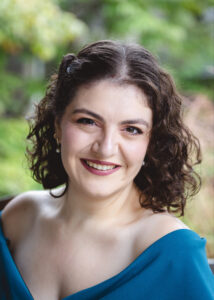 Marisa Curcio is a New York-based soprano whose work spans from the late medieval through new compositions. She was recently featured in Saints at a Disco (Prelude) with The New Consort and Gerard and Kelly through The Met Live Arts, singing both Hildegard and reimagined disco classics. Other solo work this season has included quite a bit of Bach, which Marisa heartily welcomes: Cantata 51 with Amor Artis, Mass in B minor with Music in the Somerset Hills (MISH), and Christmas Oratorio with Princeton Pro Musica.
Marisa’s recent small ensemble work includes a concert celebrating Palestrina’s 500th with Res Facta through the Gotham Early Music Scene (GEMS) and works by Bach and Gibbons with Music in the Somerset Hills (MISH). She is on the core roster of Res Facta and Amor Artis, and is a founding member of the Philadelphia-based choral collective, Convoco, which is in its fifth season. She is in her eleventh season with the Philadelphia Symphonic Choir, the choir-in-residence for The Philadelphia Orchestra. In the past year, Marisa could also be heard with noted ensembles such as The Orchestra of St. Luke’s, The Sebastians Baroque Orchestra, New York Baroque Inc., and Ensemble Altera.
A seasoned church musician, Marisa is a member of the professional choir at St. James’ Madison Avenue and the Lux Choir at The Episcopal Church at Princeton University (ECP). She is featured on the soon-to-be released album with the Lux Choir, A Fragment of the Immortal Air, on Affetto Records. Marisa holds degrees from Westminster Choir College, where she studied with Tom Faracco. She resides in northern New Jersey with her wife and their cat, Regina Cæli.
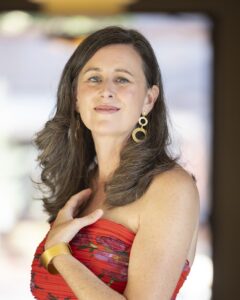 Recognized by the New York Times for her “vibrant and colorful” singing, mezzo-soprano Kate Maroney enjoys a varied career on concert, oratorio, and opera stages in works that span from the Renaissance to the 21st century. She is also in demand as a voice pedagogue active at music conservatories and festivals in New York and across the country.
Kate is a passionate believer in the deeply transformative, fully humanizing power of music and its ability to foster empathy in the community of performers and listeners alike. She particularly values collaborations with kind and generous colleagues who share this conviction.
Kate has appeared frequently at Lincoln Center, including at the Metropolitan Opera, the David H. Koch Theater, David Geffen Hall, and Alice Tully Hall. As a soloist, Kate has performed with the American Classical Orchestra (Bach’s Mass in B-Minor, C.P.E. Bach’s Magnificat), New York City Ballet and Musica Sacra (Mendelssohn’s A Midsummer Night’s Dream), at Carnegie Hall and Chicago’s Orchestra Hall (Handel’s Dixit Dominus), at LA Opera (Missy Mazzoli’s Song From the Uproar, Philip Glass and Robert Wilson’s Einstein On The Beach), at Carmel Bach Festival (BWV 97 and BWV 199), at Baldwin Wallace Bach Festival (Bach’s Weihnachts-Oratorium and Mass in B-Minor), with New York Baroque Incorporated (Bonaventura Aliotti's Santa Rosalia at Trinity Wall Street), with The Bach Choir of Bethlehem (BWV 42), at The Blue Hill Bach Festival (BWV 147), with TENET Vocal Artists (Handel’s Messiah, Schütz’s Musikalische Exequien, Bach’s Weihnachts-Oratorium, Magnificat, Easter Oratorio, In Darkness Let Me Dwell: Music of Dowland and Contemporaries), with Boston's Chorus Pro Musica at Jordan Hall (Beethoven’s Missa Solemnis), at Greenwood Cemetery for Death of Classical (Pergolesi’s Stabat Mater), with Master Chorale of South Florida (Duruflé’s Requiem), with Brooklyn Art Song Society (Janacek’s The Diary of One Who Disappeared, Ravel’s Hebrew Songs, Webern’s Op. 4 Fünf Lieder nach Gedichte von Stefan George, Schoenberg’s The Book of the Hanging Gardens), with Santa Fe Desert Chorale and Chamber Symphony (John Corigliano’s Fern Hill, Aaron Copland’s In The Beginning, Monteverdi’s Lamento della Ninfa), Monmouth Civic Chorus (Haydn’s Lord Nelson Mass), Bard SummerScape Festival (Michael Gordon’s Acquanetta), with The New York Philharmonic Orchestra and The Crossing (Julia Wolfe’s Fire In My Mouth), with Portland Bach Experience (Monteverdi’s Vespers, Bach’s Magnificat, Mendelssohn’s Elijah), Indianapolis Symphonic Choir (Mendelssohn’s Elijah), at MetLiveArts (David Lang’s the little match girl passion), at Oregon Bach Festival (Bach’s Weihnachts-Oratorium under Helmuth Rilling, Hadyn’s The Creation under Matthew Halls), with Modern Medieval and the Folger Consert on Capital Hill (Music from the Trecento), Fairfield County Chorale (Bach’s B-Minor Mass and Magnificat), with Princeton Pro Musica (Bach’s Weihnachts-Oratorium, Handel’s Israel in Egypt), with Clarion Music Society (Alto soloist in Maxamilian Steinberg's Passion Week in New York, St. Petersberg, Moscow, and London, Dritte Dame in Mozart’s Die Zauberflöte ), with Bach Collegium San Diego (Handel’s Messiah, BWV 170 Vergnügte Ruh, beliebte Seelenlust), with Mark Morris Dance Group (Vivaldi’s Gloria, Bach’s Jesu meine Freude), “A Memorial to Allen Forte” at Yale University with Cantata Profana (Webern’s Op. 4 Fünf Lieder nach Gedichte von Stefan George), with Bach Vespers at Holy Trinity (soloist in all major Bach works and numerous cantatas, over 15 years), at Bard Music Festival, with Anonymous 4 and The Bangor Symphony, with Ekmeles Vocal Ensemble at the MATA Festival, with Experiments in Opera, Yale Choral Artists, Vox Vocal Ensemble at The Guggenheim Museum, American Opera Projects, Beth Morrison Projects, Berkshire Bach Society, Berkshire Choral International, and the Rochester Philharmonic Orchestra.
In 2012, Kate was a recipient of the William G. Blair award in the New York Oratorio Lyndon Woodside Soloist Competition. Kate performed recitals with New York’s Polydora Ensemble (featuring Romantic repertoire for SATB quartet: Brahms’ Op. 52 Liebeslieder-Walzer, Op. 65 Neue Liebeslieder-Walzer) at St. Ignatius Loyola, the German Consulate in New York, CUNY Graduate Center's Elebash Hall, and Opera Grand Rapids, Michigan. Kate also occasionally appears with the Metropolitan Opera Chorus and especially loved being part of the 2021 production of Verdi’s Requiem, which was filmed for PBS Great Performances historically marking both the return to the Met after Covid-19, and the 20-year remembrance of 9/11. In the professional vocal chamber ensemble world, Kate is a regular member of many ensembles, including The Santa Fe Desert Chorale, Seraphic Fire, TENET Vocal Ensemble, Yale Choral Artists, Voices of Ascension, Clarion, The Choir of St. Ignatius Loyola, Spire Chamber Ensemble, and Trinity Wall Street.
Kate is a fervent champion of new music and has longstanding relationships and collaborations with many composers and new music organizations. She immensely values the process of bringing new music to life. She is featured in the vocal quartet recording of David Lang’s the little match girl passion (Cantaloupe Records, 2023). She sang throughout Ireland with the theater company Gare St Lazare Ireland, performing music by composer Paul Clark in a Samuel Beckett pastiche Here All Night. Kate performed Dominick Argento’s Pulitzer-prize winning piece, From The Diary of Virginia Woolf, in a staged adaptation by Håkan Hagegård at the Ordway Theater in St. Paul, MN, as part of the Source Song Festival. Kate was the mezzo soloist (singing texts of Emily Dickinson) in the world premiere of Martin Bresnick's oratorio Passions of Bloom with the Yale Choral Artists and Yale Sinfonia under Jeffrey Douma as part of New Haven's Festival of Arts and Ideas. (Bresnick dedicated the published score to her.) She performed the U.S. premiere of Damon Albarn’s Monkey: Journey to the West at the David H. Koch Theatre during the Lincoln Center Festival in 2013 with Ensemble Signal under Brad Lubman, and the U.S. premiere of Here All Night with Gare St Lazare Ireland as part of Lincoln Center’s 2015 White Lights Festival. Kate worked closely with Missy Mazzoli and Beth Morrison Projects to develop and premiere Song From The Uproar at The Kitchen in 2012 (and is heard on the premiere cast recording on New Amsterdam Records with the Now Ensemble under Steven Osgood). Kate created the role of Brianna in Matthew Welch’s collaborative opera Sisyphus with Experiments in Opera, and she recorded James Adler’s Reflections upon a September morn for Albany Records. Kate sings on many other recordings, including Julia Wolfe’s 2015 Pulitzer Prize-winning and 2016 GRAMMY®-nominated work, Anthracite Fields, with the Bang On A Can All-Stars and The Choir of Trinity Wall Street under Julian Wachner, and Julia Wolfe’s Fire in my Mouth with The Crossing and The New York Philharmonic Orchestra. Kate is the alto soloist on Clarion's 2017 GRAMMY®-nominated recording of Maximilian Steinberg's Passion Week, and sings on Clarion’s recordings of Rachmaninoff’s All-Night Vigil, Kastalsky’s Memory Eternal to the Fallen Heroes, and Ethel Smyth’s The Prison with the Experiential Orchestra, a 2020 GRAMMY®-winning recording. She is a soloist on the recording of Frank La Rocca’s Mass of the Americas with the Benedict XVI Choir and Orchestra, released on Cappella Records in 2022. She is a soloist with Acronym Ensemble and TENET Vocal Artists on a recording of Schmelzer’s Le Memorie Dolorose, and is also a soloist on Seraphic Fire’s 2021 recording of Hidegard von Bingen’s Ordo virtutum. She is the mezzo soloist in Jacob Cooper’s Stabat Mater Dolorosa with The String Orchestra of Brooklyn released on New Focus Records. She has recorded with Yale Choral Artists (works by David Lang and Han Lash) for Naxos Records. She recorded with guitarist Dieter Hennings on the album John Eaton: The Son Juana Project. She has worked closely with and premiered works by composers Philip Glass, Julia Wolfe, Martin Bresnick, Eve Beglarian, Amy Beth Kirsten, Daniel Felsenfeld, Daron Hagen, Dominick Argento, David Lang, John Eaton, Han Lash, Paola Prestini, Missy Mazzoli, Ted Hearne, Alex Weiser, Olga Bell, Lisa Bielawa, Haralabos [Harry] Stafylakis, Christopher Cerrone, Jacob Cooper, Michael Rose, Ola Gjeilo, Jake Runestad, Jocelyn Hagen, Reena Esmail, and Scott Wheeler.
From 2012 to 2015, Kate was featured worldwide in over 75 performances of Einstein on the Beach with the Philip Glass Ensemble. With her Einstein on the Beach family, Kate performed for audiences at major opera houses in Montpellier, Paris, London, Brooklyn, Toronto, Reggio Emilia, Amsterdam, Hong Kong, Melbourne, Berkeley, Mexico City, Los Angeles, Berlin and Gwangju, South Korea. Being part of this historic tour and piece of living art was a profound and transformative experience for which Kate is incredibly grateful. She also learned how to sing numbers really fast.
Kate holds a a D.M.A. from Eastman in Voice Performance and Literature with a Minor in Voice Pedagogy, as well as degrees in music from SUNY Purchase and Yale. She has written and contributed to articles published in The Washington Post, The Middle-Class Artist, The Journal of The New York Singing Teachers' Association ("Reflections from the Beach: Einstein on the Voice") and an entry on singing Webern for the Society of Music Theory Performance and Analysis Interest Group.
In addition to performing, Kate teaches voice and vocal pedagogy at Mannes School of Music (The New School) and Yale University.
When not singing, traveling, and teaching her heart out, Kate loves being home in Fort Greene, Brooklyn with musician and composer husband Red Wierenga, son, Ossian, and their two cats, Misha Mengelberg and Albert Ayler. She has Irish citizenship and often fantasizes about moving “home” someday to live in Sligo, where her grandfather was born. She studies French actively with the hope of becoming fluent in five years, and she is otherwise focused on reading literature she missed along the way. Recommendations welcome!
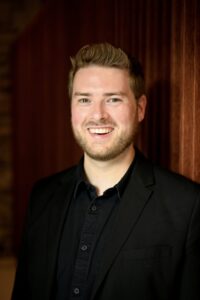 Sam Denler, tenor, is based in New Haven, Connecticut, and performs as a soloist and choral singer around the world. He sings in the Philadelphia Symphonic Choir under Yannick Nézet-Séguin, is the tenor soloist for Amor Artis, will soon perform for the fourth time with elite early music ensemble Res Facta, and filmed a scene with Bradley Cooper for Netflix’s Leonard Bernstein biopic Maestro. Mr. Denler has been featured in numerous music festivals, most recently with the Bachakademie in Stuttgart, Germany, and in his sixth fellowship with the Spoleto Festival in Charleston, SC. He is also a skilled professional audio/video engineer for many ensembles across the US. This season’s engagements include TENET, Byrdsong, Convoco, VAE, Fifth Ave Presbyterian, Yale Consort, Kollective366, and much more.
Mr. Denler has just graduated with his Master's in Voice: Early Music, Oratorio + Chamber Ensemble in the prestigious Voxtet ensemble from Yale University in May. The eight students in the program are featured soloists throughout the year. Sam’s performances this year included the title role in Handel’s Jephtha, for which Parterre Box said "His bright tenor dealt handily with the difficult coloratura, spinning out a lovely, comforting 'Waft her angels.'” He also completed a tour of Italy this summer with Haydn’s Creation, directed by Grete Pedersen, for which a review said that “Sam Denler, as Uriel, narrated the emergence of the world with lightness, like Christian Gerhaher. Not human inflection, but a messenger of God.” The tour culminated in Rome with a concert of Italian madrigals with Simon Carrington. He earned his Bachelor’s in Music Education at Westminster Choir College in 2019, where he sang with the Westminster Choir, early music ensemble Kantorei and the Westminster Symphonic Choir.
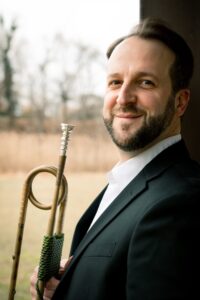
Perry Sutton, trumpet, leads a musically diverse life, performing in baroque, orchestral, chamber, and commercial settings with equal dexterity. His early music credits include: Apollo’s Fire, New York Baroque Inc., Trinity Baroque, La Fiocco, Bach@7, and Clarion Music Society. Perry has recently appeared as principal trumpet with The Tenet and Tempesta di Mare: The Baroque Orchestra of Philadelphia.
Perry holds degrees from Mason Gross School of the Arts of Rutgers University, and Rowan University College of Fine and Performing Arts.
[Coming soon]
[Coming soon]
Related Events


BY POPULAR DEMAND: Picked by You, Sung by Us!
Saturday, March 13, 2027, 4 p.m.
IMMORTAL FIRE: 200 Years of Beethoven
Sunday, May 16, 2027, 4 p.m. | Pre-concert talk, 3 p.m.